

The Neuroscience of Language Acquisition

Dr. Emily Chen
Author
3 min read
Read Time
How your brain physically changes when you learn a new syntax. We dive deep into neuroplasticity and why age is just a number.
The Plastic Brain
For decades, linguists believed that after the "critical period" of childhood, learning a new language was nearly impossible to do perfectly. New research from the Glotta labs suggests otherwise.
Your brain is remarkably adaptive. When you start learning a new language, you're not just memorizing vocabulary - you're fundamentally rewiring neural pathways that have been dormant since childhood.
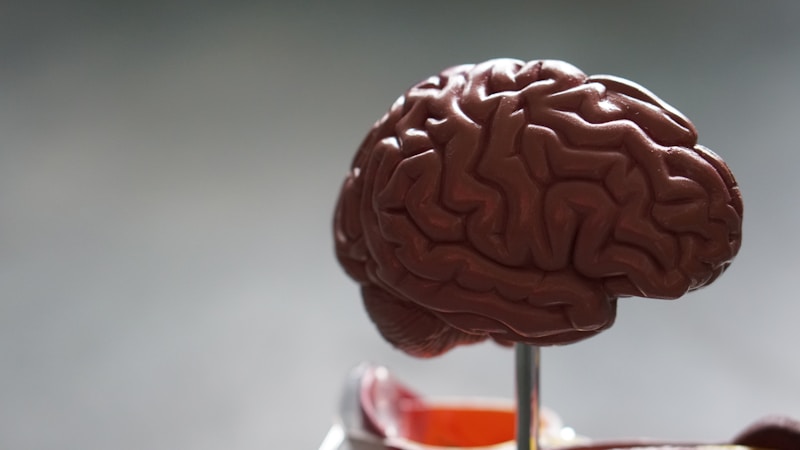
Neural pathways reorganize when learning a new language
Synaptic Pruning
Your brain is a gardener. It prunes connections you don't use. When you start learning Spanish at 30, you aren't just memorizing words; you are forcing your brain to re-route neural pathways that have been dormant.
Recent fMRI studies show that adult language learners can develop the same neural patterns as native speakers, given the right conditions and consistent practice.
The Dopamine Loop


Every time you successfully recall a word, your brain releases a hit of dopamine. This is why gamification works. But to truly learn, you need to move beyond the game and into context.
Here's what the science shows works best:
- Immersion: Trick your brain into thinking survival depends on the new language.
- Repetition: Spaced repetition is non-negotiable. Your brain needs to encounter words at increasing intervals.
- Sleep: Your brain cements these pathways while you rest. Studies show that sleeping after learning improves retention by up to 40%.
Breaking the Age Myth
The "critical period hypothesis" has been challenged by numerous studies. While children may have certain advantages in pronunciation, adults excel in:
- Grammar comprehension: Adult brains are better at understanding complex rules
- Vocabulary acquisition: Life experience helps with contextual learning
- Motivation: Adults know why they're learning
The key isn't age - it's method, consistency, and the right kind of practice.
Practical Applications
So how do you leverage neuroscience for language learning?
Create emotional connections: The amygdala helps cement memories. Learn words in contexts that matter to you emotionally.
Use multiple senses: Visual, auditory, and kinesthetic learning all activate different brain regions. The more regions involved, the stronger the memory.
Practice before sleep: Your brain consolidates memories during deep sleep. Review flashcards or conversation logs before bed.
The brain you have today is capable of learning any language. You just need to understand how to work with it, not against it.